
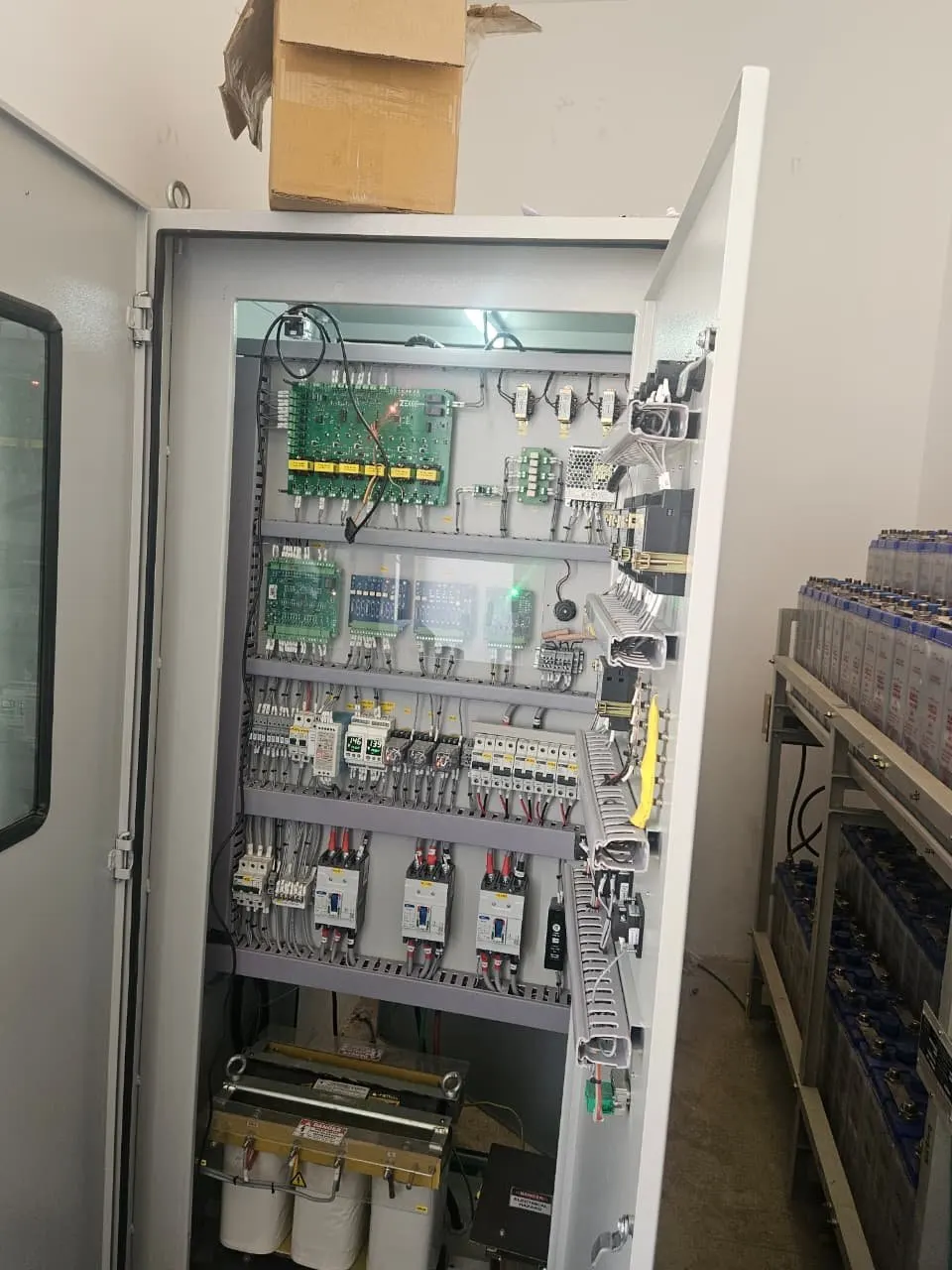
If your facility runs motors, pumps, compressors, welding sets or fluorescent lighting, part of the current it draws does no useful work. That part is called reactive power, and it is the reason power factor matters.
What power factor means
Power factor is the ratio of real power (kW, which does the work) to apparent power (kVA, which the supply has to deliver). A power factor of 1.0 means every ampere drawn is doing useful work. At 0.7, the supply carries roughly 40% more current than the useful load needs.
Inductive loads such as motors are the usual cause. They need a magnetising current that flows back and forth between the load and the supply without being consumed.
Why low power factor costs money
- Utility charges. Electricity tariffs for commercial and industrial customers commonly penalise low power factor or bill on kVA demand, so a poor power factor can raise your bill directly.
- Losses and heating. Higher current means more heat in cables, switchgear and transformers, and more energy lost as heat.
- Lost capacity. A transformer or generator rated in kVA reaches its limit sooner. Correction can free capacity for new equipment without upgrading the supply.
- Voltage drop. Extra current increases voltage drop, which can affect sensitive equipment at the far end of long cable runs.
How it is corrected
The usual fix is a capacitor bank, which supplies the reactive power locally so it no longer has to come from the utility.
- Fixed capacitors suit a single large motor that runs at a steady load.
- Automatic (stepped) capacitor banks switch stages in and out as the load changes. They suit most factories and commercial buildings.
- Detuned banks with reactors are used where variable speed drives, UPS systems or other electronics create harmonics, which can damage standard capacitors.
Where to start
A short power quality survey, logging voltage, current, power factor and harmonics over a normal working period, shows whether correction is worthwhile and how large the bank should be. Sizing a bank from the bill alone often leads to over- or under-correction.
DESWA designs, supplies and installs power factor correction as part of our industrial and commercial work. Ask us for a survey.
Planning a power or electrical project?
Tell us what you need and our engineers will arrange a site survey.